
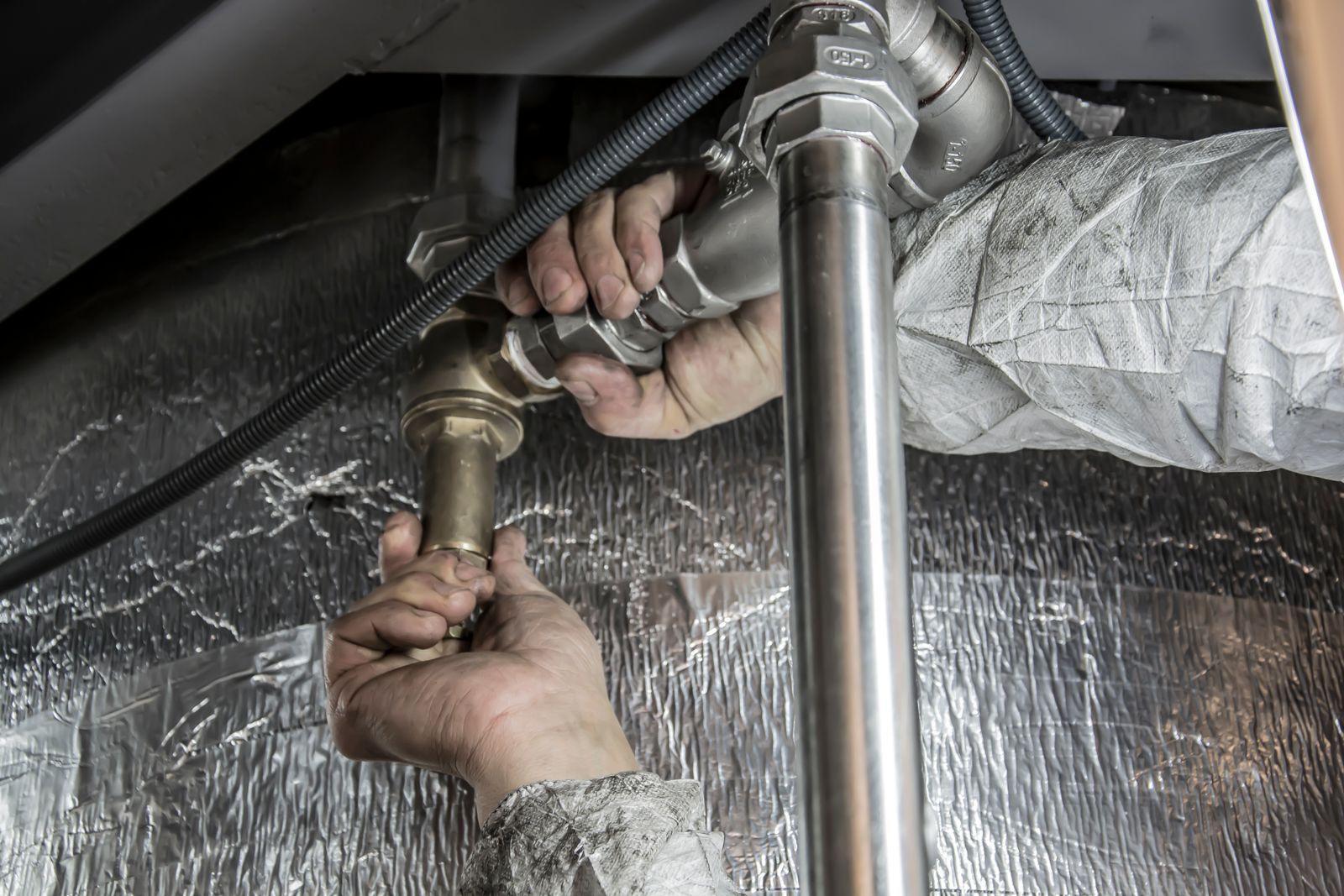
Every few winters a hard freeze moves across North Carolina and plumbers spend the following week doing nothing but burst pipes. People are always surprised, because it does not get that cold here. That surprise is exactly the problem, and it has a structural explanation.
Why a mild climate produces so much freeze damage
In genuinely cold regions, water lines run through heated basements. They are inside the thermal envelope of the house and they are insulated because building there assumes freezing.
Most North Carolina homes from the post war era through the 1990s sit on a vented crawl space instead. The supply lines run underneath the floor, in a space that is open to outdoor air by design, and in a great many houses they were never insulated at all. So the pipe is sitting in whatever the temperature outside happens to be, with nothing between it and the cold.
That is why a night at 18 degrees can split pipes in Wilmington or Greenville while the same night barely registers in a Pennsylvania house. The cold is milder. The exposure is far worse.
Where pipes actually freeze here
- Crawl space supply runs, especially near foundation vents and along the perimeter where wind reaches them.
- Exterior wall runs feeding kitchen sinks and bathrooms on the outside of the house, where there is little or no insulation behind the pipe.
- Hose bibs and outdoor spigots with a hose still attached, which traps water against the valve. This is the single most common failure and the easiest to prevent.
- Unconditioned garages and utility closets, particularly where a water heater or laundry line runs along an outside wall.
- Attic runs, in homes that were repiped overhead after a slab leak. Attics get colder than people expect on a clear, still night.
If your pipes are frozen right now
A frozen pipe that has not split yet is a fixable problem if you move carefully. A frozen pipe that gets heated too fast becomes a burst pipe.
- Open the faucet the frozen line feeds. Melting ice needs somewhere to go, and an open faucet relieves the pressure that actually splits pipe.
- Warm the pipe gradually, working from the faucet back toward the frozen section. A hair dryer, a heat gun on low, a space heater at a safe distance, or towels soaked in hot water all work.
- Never use an open flame or a torch. It is the most common way people turn a frozen pipe into a house fire, and it can also fail the pipe outright at the heated spot.
- Check every other fixture once flow returns. If one line froze, others were close.
- If the line is inside a wall or you cannot find it, shut off the main and call a plumber. A pipe that thaws unattended inside a wall is how a small problem becomes a ceiling replacement.
If a pipe has already burst
- Shut off the main water valve immediately. Find it before winter, not during. It is usually at the meter near the street or where the line enters the crawl space.
- Kill power to affected areas at the breaker if water is anywhere near outlets, fixtures, or the panel.
- Photograph everything before you clean up. The water, the failed section of pipe, the damage. Insurers ask, and cleanup destroys the evidence.
- Start drying immediately. Mold in a wet crawl space is a matter of days here, not weeks, given our humidity.
- Get the repair permitted if it is more than a coupling. An inspection record protects you on this claim and the next one.
When a freeze means the whole system is done
One split pipe is a repair. What matters is what the split tells you about the rest of the system.
If the failed line is galvanized steel, the freeze usually just found the thinnest spot in a system that was already corroding from the inside. If it is polybutylene, the freeze found pipe that was already brittle from years of chlorine exposure. In both cases the rest of the house is the same age and the same material, and patching one section buys you until the next cold night. Repeat freeze failures in the same winter are the clearest signal that repiping is the actual fix. Our repipe cost guide covers what that runs locally.
The fixes that actually prevent it
Dripping faucets works, but it is a response to a forecast, not a solution. These are, roughly in order of value for money:
| Fix | Typical cost | What it solves |
|---|---|---|
| Disconnect hose bibs each autumn | Free | The most common single failure point |
| Foam insulation on exposed crawl space supply lines | $150 to $600 | The main cause of NC freeze bursts |
| Insulated covers on outdoor spigots | $5 to $15 each | Hose bib and sill cock freezing |
| Seal crawl space vents during freeze events | $50 to $200 | Wind chill reaching the pipe |
| Heat tape on the most exposed runs | $200 to $700 | Runs that stay cold no matter what |
| Crawl space encapsulation | $5,000 to $15,000 | Freezing, humidity, and mold together |
Ranges are typical for the Wilmington and Greenville areas and are not a quote. The first four items handle the large majority of freeze failures for very little money.
Before the next cold snap
- Find and label your main shutoff valve, and make sure it actually turns.
- Disconnect and drain every hose, and cap the bibs.
- Walk the crawl space with a flashlight and note any bare pipe near a vent.
- If you travel in winter, leave the heat at 55 or higher rather than off. Turning it off is a common insurance exclusion.
- Open cabinet doors under sinks on exterior walls during a freeze so room air reaches the pipes.
None of this is expensive, and almost all of it is a single Saturday. The homes that get through a hard freeze without damage are rarely the ones with the best plumbing. They are the ones where somebody spent an afternoon in the crawl space in November.
Frequently Asked Questions
At what temperature do pipes freeze in North Carolina?
The number people quote is 20 degrees Fahrenheit, but the real trigger is how long it stays cold, not how cold it gets. A few hours at 25 degrees rarely does damage. A night below 20 with wind, followed by a day that never climbs above freezing, is what splits pipes here. Because so much of our plumbing runs through vented crawl spaces at outdoor temperature, North Carolina homes freeze at conditions that would not trouble a house up north.
Why do pipes burst in mild climates like coastal NC?
Because the housing stock was never built for it. In cold regions supply lines run through heated basements and are insulated as a matter of course. Here most post war through 1990s homes sit on a vented crawl space, so the water lines run through what is effectively outdoor air, often uninsulated. That is the single biggest reason a mild climate produces freeze bursts: the pipe is not protected, so it does not take much cold to reach it.
What do I do if my pipes are frozen but not burst?
Open the affected faucet first so melting water has somewhere to go and pressure can escape. Then warm the pipe gradually with a hair dryer, a heat gun on low, or towels soaked in hot water, working from the faucet back toward the frozen section. Never use an open flame or a propane torch. If you cannot locate the frozen section, or the line is inside a wall, shut off the main and call a plumber before it thaws on its own.
How do I stop pipes freezing without leaving taps running all winter?
You do not need to drip continuously, only through an actual freeze event. The lasting fixes are insulating the exposed supply lines in the crawl space, sealing crawl space vents and foundation gaps during cold snaps, disconnecting hose bibs in autumn, and adding heat tape to the few runs nearest exterior walls. Do those once and the annual dripping ritual becomes a backup rather than the plan.
Does homeowners insurance cover burst pipe damage?
Usually the resulting water damage is covered, while the pipe repair itself often is not. The common exclusion to watch for is failing to maintain heat in the home, which is why an unoccupied house with the heat turned off is the worst case. Document everything before cleanup: photograph the water, the failed pipe, and the damage, and keep receipts for emergency mitigation. If your home still has polybutylene, be aware that a freeze claim can also prompt a coverage review, which our polybutylene and insurance guide covers.