
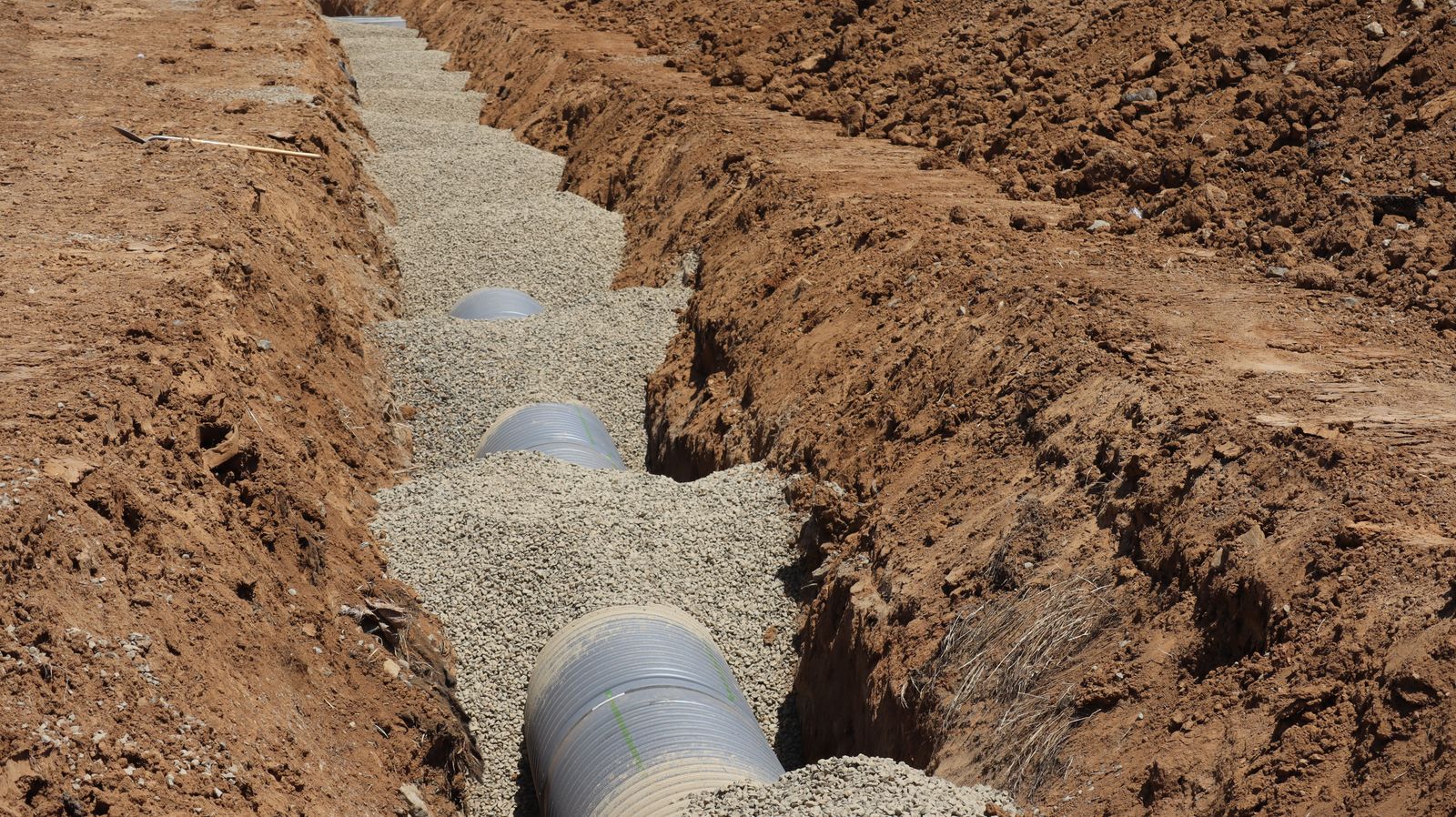
If you have had the main line cleared more than once, the useful thing to understand is that you do not have a clogging problem. You have a pipe problem that expresses itself as clogs. Clearing it again treats the symptom, which is why the interval between visits tends to get shorter.
There are four things that make a lateral clog repeatedly, and they call for different fixes at very different prices.
1. Roots at a cracked joint
Roots do not break into sound pipe. They find an opening that already exists, almost always a separated clay hub or a corroded section of cast iron, and grow toward the water inside. Once in, they fan into a mat that catches paper and grease.
Cutting them out restores flow immediately, which makes it feel solved. But the opening is still there and the root system is still alive, so the schedule repeats: often annually, then every eight months, then every six. Pre-1970 neighborhoods around downtown Wilmington run exactly the clay and cast iron laterals where this happens, and mature street trees make it worse.
The real fix is repairing or replacing the compromised section, or lining the pipe so there is no opening left to grow into.
2. A belly in the line
A belly is a section that has settled below its intended slope, creating a low spot that holds standing water. Solids drop out in the standing water instead of being carried along, and the low spot slowly fills.
This is a genuinely regional problem. The coastal plain gives us sandy backfill that compacts and shifts over time, and a shallow water table that keeps the ground beneath the pipe soft. That combination lets a lateral sag in a way it would not in dense clay soil. It is also why Greenville sees the same failure pattern out toward Winterville and the unincorporated county.
The real fix is re-grading, which means excavating that section. A belly cannot be snaked, jetted, or lined away. Any contractor who says otherwise is quoting you a temporary result.
3. Scale and buildup in cast iron
Cast iron corrodes from the inside. Over decades the interior develops a rough, flaking scale that narrows the effective diameter and grabs anything fibrous. A four inch pipe can be functioning like a two inch pipe long before it fails outright.
The real fix is hydro jetting to scour the wall back to something closer to smooth, which buys real time, or lining or replacing the run if the wall has thinned too far to be worth saving.
4. A separated joint or partial collapse
Ground movement, root pressure, or age pulls a joint apart or drops a section of pipe. Soil enters, flow slows, and debris catches at the offset. This one tends to worsen quickly compared with the others.
The real fix is a spot repair if it is one location, or replacement if the line has multiple failures.
How to tell which one you have
You cannot, reliably, from the surface, and this is the point where guessing gets expensive. A camera inspection puts a lens down the line, shows the defect, and locates it in the yard to within a foot or two. That single step is what separates a targeted $1,000 spot repair from a speculative $8,000 replacement.
It runs $150 to $350 and is frequently credited against the repair. Details in the sewer camera inspection guide.
What each fix costs around Wilmington
| Fix | Typical cost | Right for |
|---|---|---|
| Camera inspection and locate | $150 to $350 | Every repeat backup, before anything else |
| Hydro jetting | $350 to $600 | Scale and grease, not structure |
| Spot repair, single section | $1,000 to $3,000 | One cracked joint or short collapse |
| Sectional liner | $1,000 to $4,000 | A defect in an otherwise sound line |
| Full replacement, open trench | $3,000 to $8,000 | Multiple failures or a bellied run |
| Long, deep, or paved over runs | $8,000 to $15,000 | Driveways, mature landscaping, deep laterals |
| Trenchless lining or bursting | $80 to $250 per foot | Keeping the yard and driveway intact |
Typical Wilmington area ranges, not a quote. See the full sewer line cost breakdown for what moves a number within these bands.
One thing worth knowing about who owns the pipe
The lateral running from your house to the public main is the homeowner's responsibility, not the utility's, across this market. People routinely assume CFPUA or the county will handle a failure at the street and find out otherwise at the worst moment. Where your responsibility ends varies by jurisdiction, and our service areas page covers which authority applies in New Hanover, Brunswick, Pender, and Pitt County.
The short version
Once is a clog. Twice is a pipe. If you have cleared the same line more than once, the next money is better spent on a camera than on another clearing, because every option after that depends on knowing which of the four problems you actually have. See sewer line replacement in Wilmington or trenchless repair for what the work involves.
Frequently Asked Questions
Why does my sewer line keep backing up after being snaked?
Because snaking clears the blockage, not the reason for it. An auger punches a channel through whatever is in the way and water flows again, but if roots are entering at a cracked joint, or the line has settled into a low spot, or the pipe wall has scaled, the same thing refills within weeks or months. A line that has backed up twice is a structural problem, and the second clearing is money spent on the symptom.
How often is too often for a main line to clog?
A healthy lateral should not need clearing at all. Once in a decade after something unusual went down it is bad luck. Twice in a year means something in the pipe has changed shape: roots, a separated joint, a belly holding water, or heavy scale. At that point the useful next step is a camera, not another auger.
What causes roots in a sewer line?
Roots do not attack sound pipe. They find an existing crack or a separated joint, usually at a clay hub or a corroded cast iron section, and grow toward the moisture and nutrients inside. Once inside they fan out and catch everything passing through. Cutting them clears the line temporarily but leaves the opening, which is why root problems return on a predictable schedule until the pipe is repaired or replaced.
What is a bellied sewer line?
A section that has settled below the intended slope, forming a low spot that holds standing water and collects solids. This is common on the coastal plain because sandy backfill compacts and shifts, and a high water table makes the ground beneath the pipe less stable. A belly cannot be snaked away. It has to be re-graded, which usually means excavating that section or replacing the run.
Does homeowners insurance cover a sewer line backup?
Standard policies generally exclude both the line repair and the resulting backup damage unless you carry a specific sewer backup endorsement, which is usually an inexpensive add on. Service line coverage, which helps with the buried pipe itself, is also sold separately by many carriers. Worth checking your declarations page before you need it rather than after.