
Polybutylene Pipe Replacement in Greenville, NC
Polybutylene went into a lot of Pitt County houses between the late 1970s and the mid 1990s, exactly the era that filled in south Greenville, the neighborhoods off Arlington and Red Banks, and the early subdivisions creeping toward Winterville. The gray pipe is easy to spot in a crawlspace, and it fails from the inside out where treated municipal water attacks the resin and the plastic insert fittings. Most Greenville homeowners spend $4,500 to $9,000 for a single-story crawlspace repipe in PEX, with slab houses and larger two-story homes running $8,000 to $16,000.
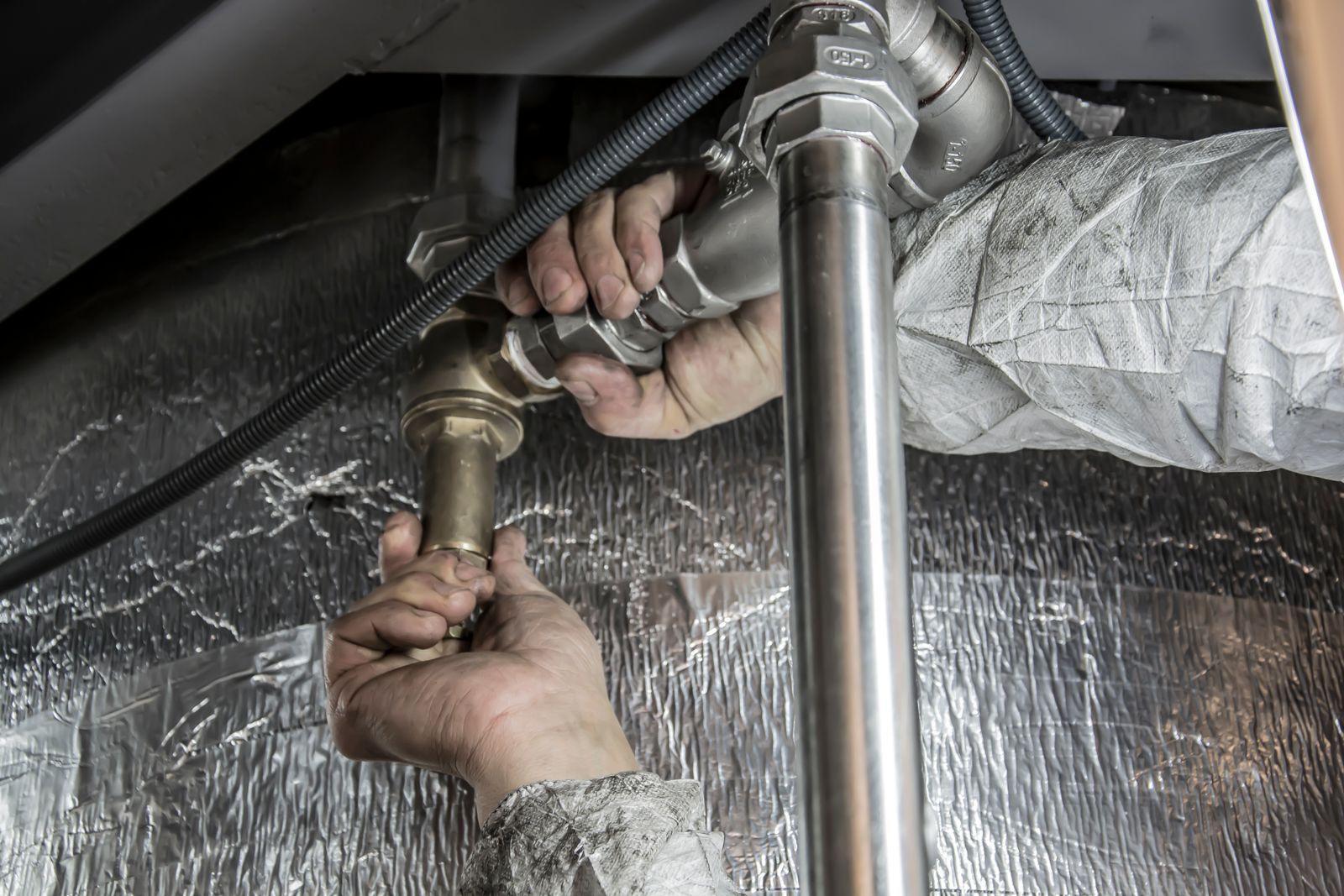
Polybutylene, often shortened to poly b, is the grey plastic supply pipe installed in millions of homes between 1978 and 1995. It reacts with chlorine in municipal water and becomes brittle from the inside out, then fails without warning. It was pulled from US plumbing codes after the Cox v. Shell Oil class action, and insurers now routinely decline, exclude, or surcharge homes that still have it. Replacement with PEX permanently ends both the rupture risk and the insurance problem.
How to tell if you have polybutylene
- Grey, flexible plastic pipe about the diameter of a pencil to a garden hose
- Stamped markings that read PB2110 along the pipe
- Visible at the water heater connection, under sinks, or in the crawl space
- Home built or replumbed between 1978 and 1995
- Insurance renewal letter asking about plumbing material or year built
- Gray or light blue plastic pipe visible where the water line enters the crawlspace, or stubbed up at the water heater with crimped copper or plastic rings
- A soft, always-wet patch in a sandy yard between the meter box and the house foundation, which usually means the buried polybutylene service line has split
Why Greenville's Late-1970s to 1990s Housing Stock Is Full of Gray Pipe
Polybutylene was cheap, flexible, and fast to run, which made it the default in tract housing during Greenville's growth years south and west of uptown and out along the Winterville corridor. Most of those houses are crawlspace built, so the pipe was strung across floor joists and through band boards where it sees temperature swings all year and freezing air during the hard cold snaps that hit eastern North Carolina every few winters. That thermal cycling works the crimped fittings loose. Older galvanized and copper homes near uptown and around East Carolina University usually skipped polybutylene entirely, so if your house predates the late 1970s you are more likely dealing with thinning galvanized steel instead. The tell is simple: get under the house with a light and look at the color and the fittings. Gray pipe with acetal plastic fittings is the worst combination and tends to let go without warning.
What Sandy Soil and the High Water Table Do to a Repipe Here
Two things about coastal plain conditions change this job. First, buried polybutylene service lines from the meter to the house sit in loose sandy backfill that shifts and settles, and a shallow water table means a split line does not always surface as a puddle. It can quietly wash sand out from under a walk or slab for months. Second, Greenville crawlspaces are often damp and sometimes hold standing water after Tar River flooding or a heavy tropical system, so the crew has to work in poor conditions and any existing insulation is usually ruined. That is worth handling in the same trip. When the new water line has to be re-run underground, sand actually helps: it trenches easily and a directional bore or a shallow trench and pull is straightforward compared to clay markets. But wet sand collapses, so trench box or careful shoring adds time on deeper runs.
Permits, Inspections, and Who Owns Which Piece of Pipe
A whole-house repipe is a permitted plumbing job. If your house is inside the Greenville city limits, the permit and rough-in inspection go through the city's building inspections division. Homes in Ayden, Farmville, Grifton, Bethel, or the unincorporated parts of Pitt County are handled by county inspections or the local town, so confirm before work starts. Expect the inspector to want to see the new lines exposed and under pressure before anything is closed up or insulated, which means you should not let a contractor patch drywall the same day. On the utility side, the water service line from the meter into the house is generally the homeowner's responsibility, while the meter and the main belong to the utility. If your polybutylene run is on the house side of the meter box, replacement is on you. Get that boundary confirmed in writing before you agree to underground work.
Polybutylene Pipe Replacement cost in Greenville
| Scope | Typical Price |
|---|---|
| Single-story crawlspace repipe in PEX, 2 baths | $4,500 - $8,500 |
| Two-story or 3+ bath crawlspace repipe | $7,500 - $14,000 |
| Slab-on-grade repipe, lines rerouted overhead | $8,000 - $16,000 |
| Buried polybutylene service line, meter to house | $1,200 - $3,500 |
| Drywall and ceiling patching, texture and paint after repipe | $700 - $2,800 |
| Plumbing permit and inspection fees | $75 - $300 |
These are typical Pitt County ranges for planning purposes; final pricing depends on fixture count, crawlspace clearance and moisture, how much wall and ceiling has to be opened, and whether the buried service line is included.
Frequently Asked Questions
How do I know if my Greenville home has polybutylene pipe?
Check the crawlspace or the wall behind the water heater for gray flexible plastic pipe, usually stamped PB2110, joined with crimped rings over plastic or copper insert fittings. Buried service lines are often light blue. Houses built roughly between 1978 and 1995 are the ones to check, which covers much of south Greenville and the older Winterville-area subdivisions.
Do I need a permit to repipe a house in Pitt County?
Yes. A whole-house water repipe requires a plumbing permit and at least one inspection. Homes inside Greenville go through the city's inspections division; homes in the unincorporated county or in towns like Ayden and Farmville go through county or town inspections. Confirm the authority for your address, and do not let anyone close up walls before the inspection passes.
Will homeowners insurance pay to replace polybutylene pipe?
Usually not. Insurance generally covers sudden water damage from a burst line, not the cost of replacing pipe that is simply old or failure-prone. Some North Carolina carriers will decline or non-renew coverage on houses with known polybutylene, which is one reason homeowners repipe before it leaks. Ask your agent directly how they treat it.
How do I know if I have polybutylene pipes?
Look where pipe is exposed: at the water heater, under sinks, and where the main line enters at the crawl space or basement wall. Polybutylene is grey flexible plastic, roughly pencil to garden hose thickness, and usually stamped PB2110 along its length. Copper is metal, CPVC is rigid and cream colored, PEX is flexible and normally red, blue, or white. If the home was built or replumbed between 1978 and 1995 and you find grey plastic supply pipe, that is almost certainly polybutylene.
Do I have to replace polybutylene pipes?
No law requires it, but the practical answer is usually yes. Insurers are declining or restricting coverage, failures are sudden, and every buyer inspection will flag it. Planned replacement costs far less than emergency water damage plus a forced repipe.
Can polybutylene be repaired instead of replaced?
Spot repairs are possible after a failure, but they do not change the condition of the rest of the system, and insurers give no credit for partial fixes. Replacement is the only fix that resolves the insurance problem.
Related services in Greenville
Talk to a Local Plumbing Pro Today
One call connects you with a licensed Greenville area plumber. Free estimates on major work.