
Tankless Water Heater Installation in Greenville, NC
A lot of Greenville water heaters live in crawlspaces or low garage corners, which is exactly where Tar River storm flooding and freeze splits do their damage. Wall-mounting a tankless unit gets the appliance up off the ground and frees floor space in the tight utility closets common in post-war and 1970s houses. Around East Carolina University, rentals with several people showering back to back also push past what a 40 gallon tank can deliver. Expect roughly $3,000 to $5,500 installed for a whole-house gas unit in Pitt County, with electric conversions and panel work landing in a similar range.
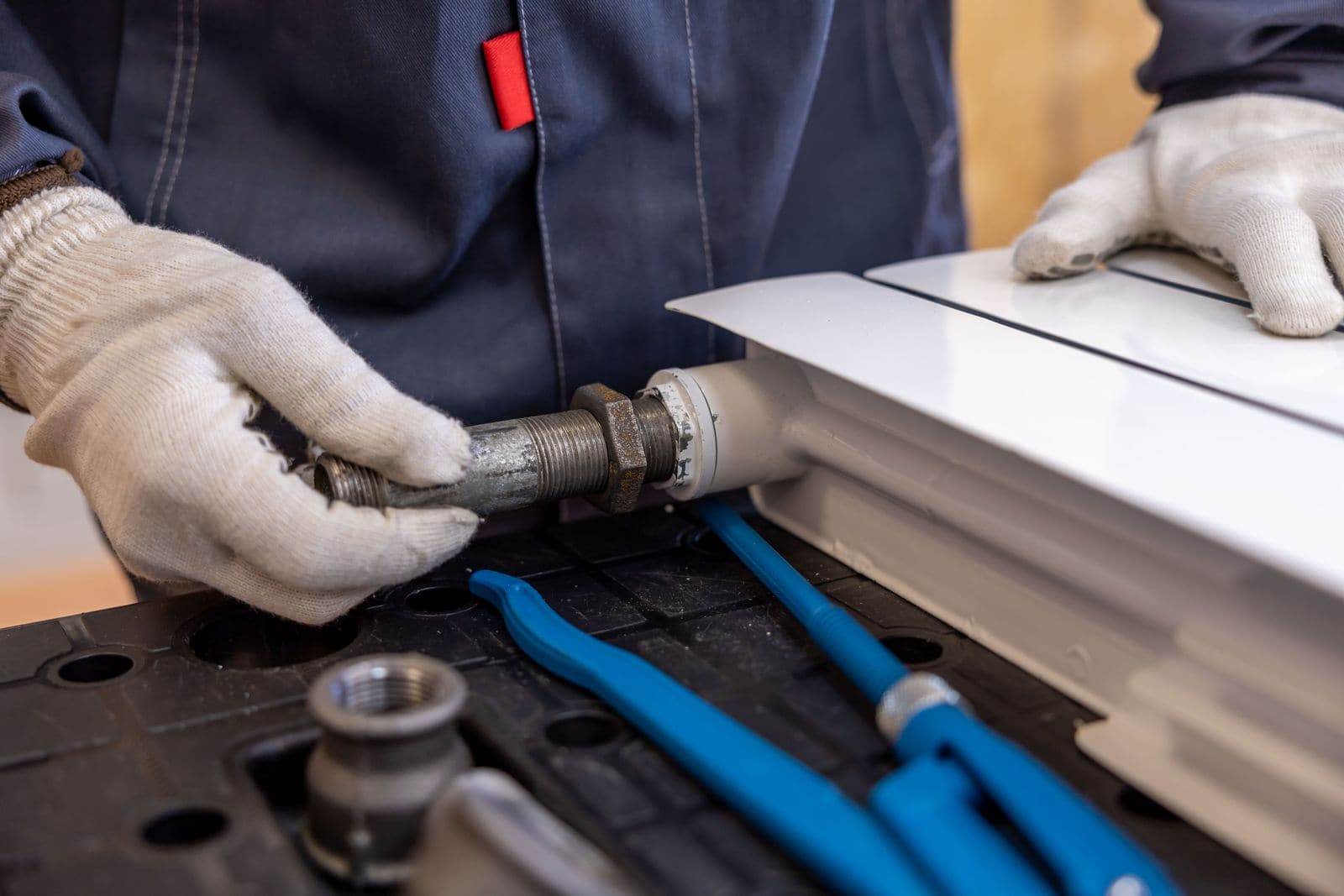
A tankless water heater heats water on demand instead of storing it hot around the clock. That means endless hot water, a 15 to 20 year service life against 8 to 12 for a tank, reclaimed floor space, and no stored water to flood the house when the unit finally fails. Gas units deliver the highest flow rates and dominate whole house installs; electric models suit smaller homes, condos, and point of use.
When tankless is the right call
- Your household regularly runs out of hot water
- The current tank is 8 plus years old and due for replacement anyway
- You want the water heater off the floor in a tight or flood prone space
- You plan to keep the home 7 plus years, letting the lifespan math pay off
- You are already repiping or renovating, when install cost is lowest
- Your existing tank sits directly on crawlspace soil or a low slab and has already been swamped once during a Tar River flood event
- Hot water runs out in 10 minutes in a multi-bedroom rental near ECU where showers and laundry overlap
Why Greenville houses are good candidates for a wall-hung unit
Most housing built here from the 1940s through the 1980s sits on a crawlspace, and the water heater often ended up in that crawlspace or in a closet barely wider than the tank. Both spots cause problems. Crawlspace tanks in this part of the coastal plain sit close to a high water table, and heavy rain or river flooding can submerge the burner and controls. A tankless unit mounts on a wall, typically inside the conditioned envelope or in a garage, which puts the electronics above flood level and recovers the closet floor for storage.
Slab-on-grade subdivisions toward Winterville and south Greenville have a different motivation: there is no basement, so the tank usually occupies a garage bay or laundry corner. Going tankless frees that footprint. In older homes near uptown and around ECU, converting also removes 50 gallons of standing weight from framing that has already dealt with decades of humidity.
Gas, propane, or electric: what changes the price in Pitt County
Inside the Greenville Utilities service territory, natural gas is generally available, which makes a condensing gas tankless the straightforward choice. The catch is the gas line. Older homes were piped for a tank burner drawing far less input than a tankless, so the run from the meter often has to be upsized, and that pipe length is what drives the bid up or down. Venting is another cost variable: condensing units need PVC or stainless venting routed through a wall or roof, and crawlspace installs sometimes need a longer run than expected.
Outside the utility territory, in areas like Grifton, Bethel, Fountain, or the unincorporated county, homes may be on propane or all electric. A whole-house electric tankless can pull enough amperage to require a service or panel upgrade, and plenty of pre-1970 homes here still have modest panels. Get the electrical assessment before committing to electric.
Permits, inspection, and what local water does to the heat exchanger
Water heater replacement is a permitted job. Homes inside the city limits go through the City of Greenville building inspections division; homes in the unincorporated county go through Pitt County inspections. A gas conversion usually means a mechanical or gas permit plus inspection of the vent termination, gas pipe sizing, and pressure test. Electric conversions add an electrical inspection if the panel or circuit changes. Ask whether the permit is included in the quoted price, because some contractors list it separately.
Water quality matters more than most homeowners expect. Households on private wells in Pitt County frequently deal with iron, sediment, and fine sand, and all three shorten heat exchanger life. A sediment filter ahead of the unit is cheap insurance, and annual descaling with a flush kit should be planned from day one. Ask the installer to add isolation valves during installation so that flush takes an hour instead of half a day.
Tankless Water Heater Installation cost in Greenville
| Scope | Typical Price |
|---|---|
| Gas tankless replacing an existing gas tank, minimal gas line work | $3,000 to $4,500 |
| Gas tankless with upsized gas line and new venting | $4,200 to $6,800 |
| Whole-house electric tankless (unit and install only) | $1,800 to $3,500 |
| Electrical service or panel upgrade needed for electric tankless | $1,800 to $4,000 |
| City of Greenville or Pitt County permit and inspection | $75 to $250 |
| Annual descaling flush and sediment filter service | $150 to $325 |
These are typical Pitt County ranges for planning purposes; the final price depends on gas line length, vent routing, electrical capacity, and how accessible the existing water heater location is.
Frequently Asked Questions
Do I need a permit to install a tankless water heater in Greenville, NC?
Yes. If your home is inside the city limits, the City of Greenville building inspections division handles the permit and inspection. Homes in the unincorporated parts of Pitt County go through county inspections. A licensed contractor normally pulls it. Inspectors typically look at gas pipe sizing, the vent termination, combustion air, and any new electrical circuit.
Should I put a tankless unit in my crawlspace instead of the old tank?
It can work, but it is usually better to relocate. Greenville crawlspaces sit over sandy soil with a high water table, and standing water or flood events reach appliances sitting low. If the unit stays in the crawlspace, mount it high on a wall or pier, keep condensate drainage sloped correctly, and confirm freeze protection, since the space is unconditioned during hard freezes.
Is a tankless water heater worth it on well water in Pitt County?
It can be, but plan for treatment. Wells on the coastal plain often carry iron, hardness, and fine sand that scale or clog a heat exchanger faster than city water does. Add a sediment filter ahead of the unit, install isolation valves for flushing, and budget for a descaling flush every year. Without that maintenance, warranty coverage can be affected.
Do tankless water heaters really last longer?
Yes. 15 to 20 years is typical with annual descaling, roughly double the life of a tank unit, and most components are individually replaceable rather than the whole unit failing at once.
How much does tankless save on energy?
Federal data puts on demand savings around 24 to 34 percent for typical households versus a standard tank, because you stop paying to keep stored water hot around the clock.
Related services in Greenville
Talk to a Local Plumbing Pro Today
One call connects you with a licensed Greenville area plumber. Free estimates on major work.