
Slab Leak Detection and Repair in Greenville, NC
Most of Greenville's older housing sits on crawlspaces, so slab leaks show up mainly in the newer slab-on-grade subdivisions toward south Greenville and Winterville, plus room additions and converted garages on older lots. Under concrete, a pinholed copper line or a separated drain joint drains into loose sandy fill and shallow groundwater, which hides the problem for months. Expect roughly $275 to $650 for electronic detection and pinpointing, and $1,400 to $3,800 for a typical single-line repair once the slab is opened or the line is rerouted overhead. Full repipes run considerably higher.
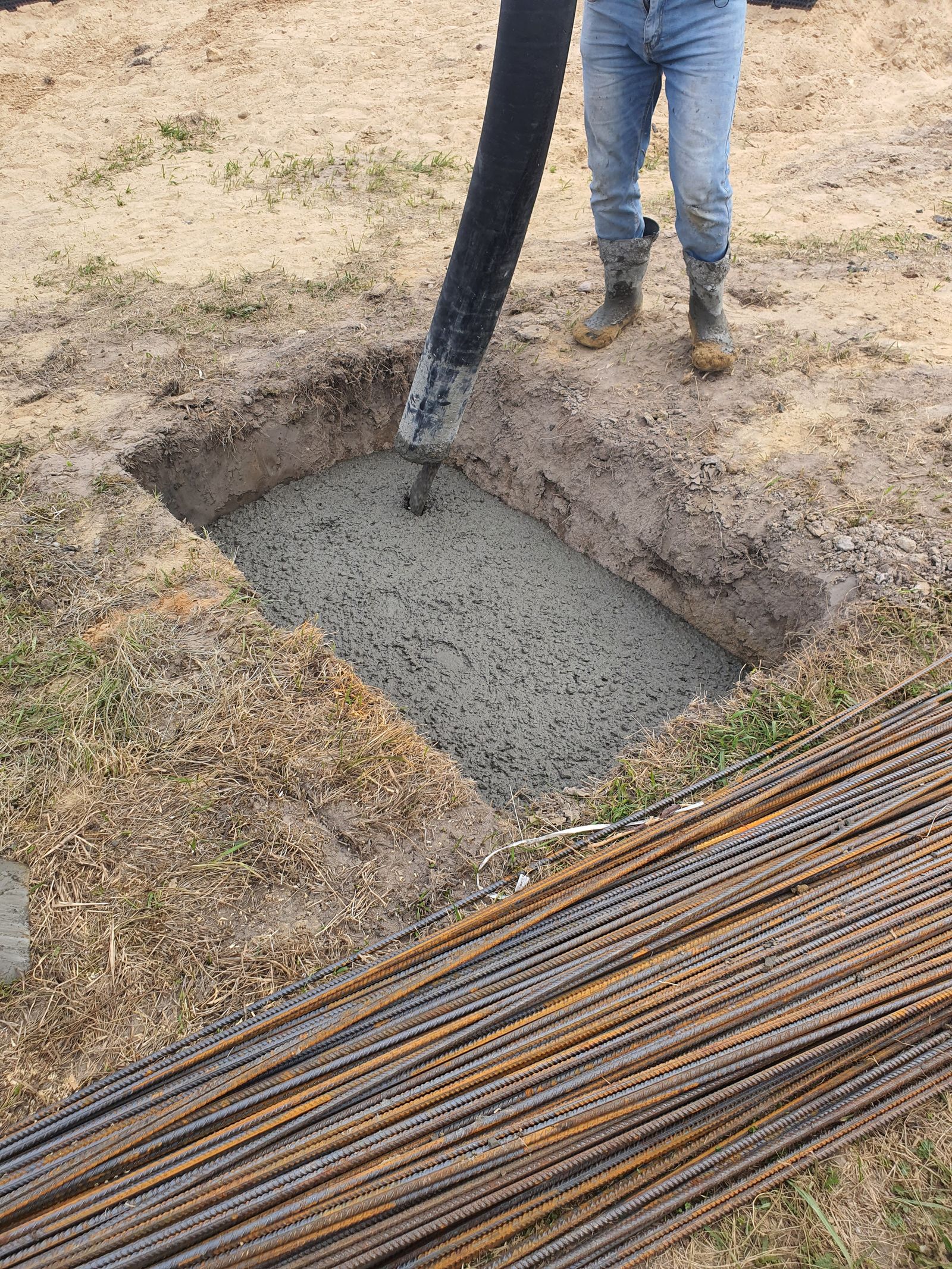
In homes built on a concrete slab, water lines run underneath the foundation where a failure is invisible until the damage shows up as a soaring water bill, a warm floor, or damp baseboards. Modern detection is non destructive: the system is pressurized and the leak pinpointed with acoustic gear and thermal imaging, which turns a vague problem into a repair the size of a doormat instead of a jackhammered hallway.
Warning signs of a slab leak
- Water bill jumps with no change in use
- Warm spots on the floor, common when the hot line is leaking
- Sound of running water when every fixture is off
- Damp carpet edges, cupping floors, or musty smell along baseboards
- Water meter dial spinning with the house shut off
- A damp band of soil or a soft, settling spot along the outside foundation edge, since sandy backfill lets escaping water travel sideways instead of surfacing indoors
- Musty smell and cupping flooring limited to a slab-built addition or converted garage while the crawlspace portion of the house stays dry
Why slab leaks here cluster in the newer subdivisions
Housing near uptown and around East Carolina University is largely post-war and mid-century, built over crawlspaces with galvanized supply lines and cast iron drains. Those houses leak, but the water shows up on the ground under the floor, not through concrete. Slab-on-grade became common in the newer neighborhoods spreading south toward Winterville and out along the highway corridors, and those homes have copper or PEX supply lines and plastic drains cast into or run beneath the slab.
Two failure patterns dominate. Copper hot lines develop pinholes where they were laid tight against rebar or poorly sleeved through the concrete, and hot water accelerates it, so the hot side usually fails first. Drain and sewer lines under slab separate at joints when sandy subgrade shifts. Older Greenville homes are not immune either: a 1960s ranch with a slab addition or a garage turned into living space has the same exposure in that one section.
What sandy soil and a high water table do to detection
On the coastal plain, the ground under a Greenville slab is loose sand over saturated subsoil, and groundwater sits close to the surface for much of the year. That changes how a leak behaves. Instead of pooling and pushing up through the concrete in one obvious spot, water often follows the sand sideways and vents at the foundation perimeter, or simply joins the water table and never shows indoors at all. Moisture meters can read high across a whole slab after a wet stretch, which makes a wet-spot survey almost useless by itself.
That is why a real diagnosis here starts with isolating the meter and pressure testing the hot and cold lines separately, then using acoustic listening or tracer gas to pinpoint. For suspected drain leaks, a camera run with a locator marks depth and position so only one hole gets cut. Skipping that step in this soil usually means opening concrete in the wrong place.
Permits, inspections, and the utility side of the bill
Plumbing repairs that involve opening a slab, rerouting supply lines, or replacing a sewer line under the house generally need a permit and inspection. Inside the city limits that goes through the City of Greenville building inspections division; for homes in Winterville, Ayden, Farmville, Grifton, Bethel, and the unincorporated parts of Pitt County, Pitt County inspections or the applicable town handles it. Confirm which office covers your address before work starts, because rough-in on a rerouted line has to be seen before it is closed up.
On the water side, homes inside Greenville Utilities Commission territory have a meter that will show continuous flow, which is often the first hard evidence of a slab leak. Ask GUC directly whether a leak adjustment is available on the affected bill and what documentation they want; policies differ and change. Homes on private wells will not get that warning at all, so a well pump that short-cycles day and night is the tell.
Slab Leak Detection and Repair cost in Greenville
| Scope | Typical Price |
|---|---|
| Electronic leak detection and pinpointing | $275 - $650 |
| Camera inspection and locate for under-slab drain line | $350 - $800 |
| Open slab, repair one supply line, patch concrete | $1,400 - $3,500 |
| Overhead or wall reroute of a single failed line | $1,600 - $3,800 |
| Spot repair of sewer or drain line under slab | $2,500 - $6,500 |
| Whole-house PEX repipe abandoning under-slab lines | $5,000 - $12,000 |
These are typical Pitt County ranges for the plumbing work only; flooring removal and replacement, drywall repair, and any water damage restoration are usually billed separately.
Frequently Asked Questions
How do I know if I have a slab leak in Greenville or just crawlspace moisture?
Check the foundation type first. Most older Greenville homes near uptown and ECU are crawlspace built, where standing water and musty air usually trace to a failed galvanized line, condensation, or Tar River flooding. If your house sits directly on concrete, or the wet room is a slab addition, a pressure test on the supply lines and a meter check will separate a slab leak from ground moisture.
Do I need a permit to repair a slab leak on my house?
Usually yes, because the repair means opening the slab or rerouting piping rather than swapping a fixture. Homes inside the city limits go through the City of Greenville building inspections division, while addresses in Winterville, Ayden, Farmville, and the unincorporated county fall under Pitt County or the town of record. Verify with the office covering your address, and have the licensed plumber pull it.
Is it cheaper to reroute the line instead of breaking the slab?
Often, yes. If the failed run is a hot water line in a slab-on-grade house, abandoning it and running new PEX through the attic or interior walls avoids jackhammering, dust containment, and concrete patching. Breaking the slab still makes sense for short runs near the perimeter or when the problem is a drain line, which cannot be moved overhead.
Is a slab leak covered by homeowners insurance?
Policies commonly cover the resulting water damage and sometimes the cost of tearing out and replacing slab to reach the leak, but not the plumbing repair itself. Coverage varies by carrier, so photograph everything and call your agent early.
How do I check for a slab leak myself?
Turn off every fixture and appliance that uses water, then watch the water meter for 15 minutes. Movement with everything off means water is escaping somewhere, and a warm floor spot narrows it to the hot side. Professional detection confirms the exact location.
Related services in Greenville
Talk to a Local Plumbing Pro Today
One call connects you with a licensed Greenville area plumber. Free estimates on major work.