
Water Heater Replacement in Greenville, NC
Most water heaters in Greenville sit in a crawlspace, a hall closet, or an attached garage, and the crawlspace units take the worst beating: sandy soil with a high water table keeps the ground damp, standing water rusts the tank base and burner area, and the supply lines feeding them freeze during the hard cold snaps that show up every few winters. Homes on private wells outside the utility's service territory also burn through anode rods fast. Expect roughly $1,200 to $2,700 for a standard tank swap in Pitt County, with tankless and heat pump upgrades running higher.
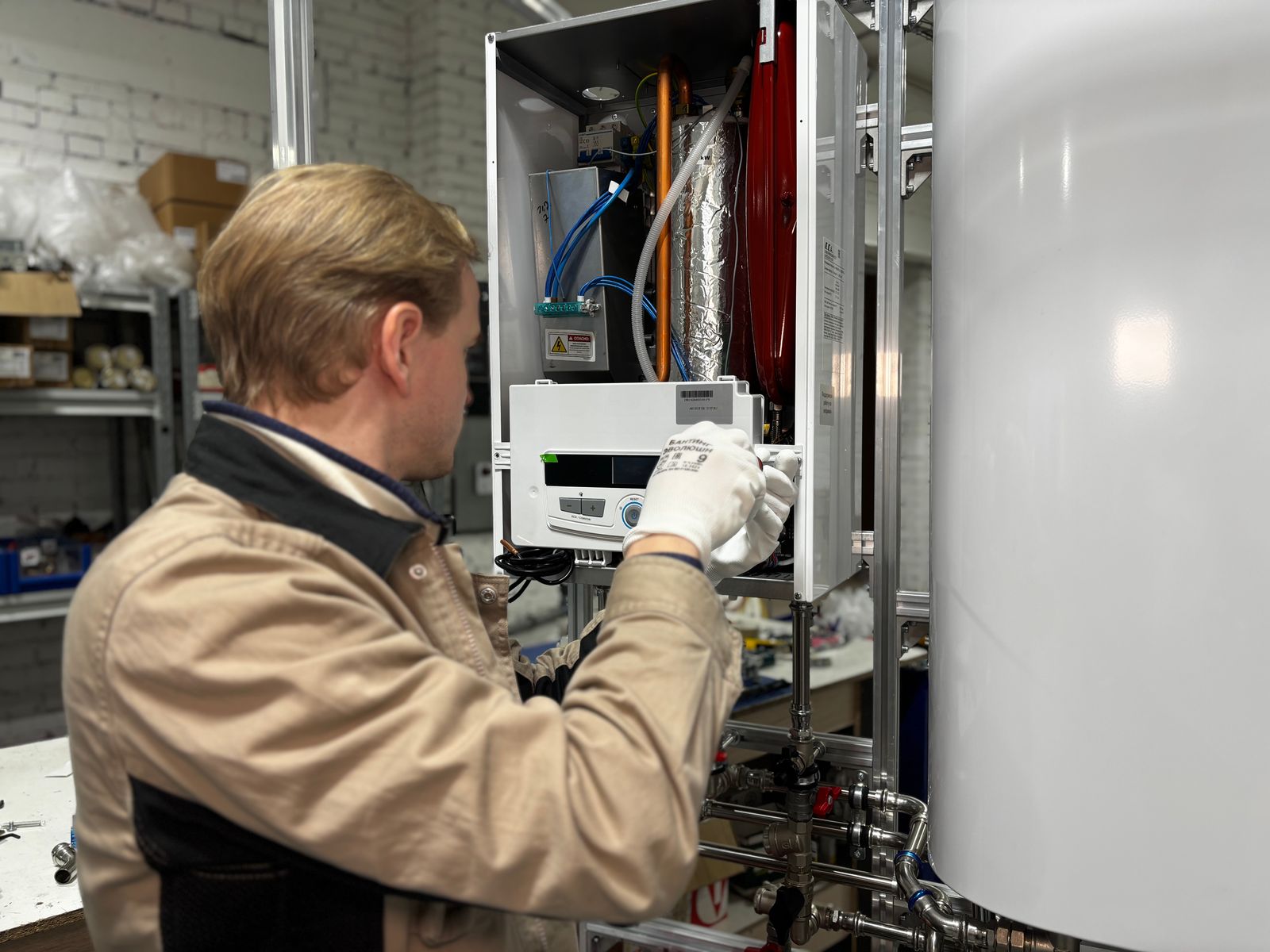
A storage water heater is a consumable. Once the steel tank itself rusts through there is no repair, only replacement. Like for like changeouts usually finish in half a day and are the right moment to correct code items older installs miss: expansion tank, drain pan, proper temperature and pressure relief discharge, and current venting on gas units.
Signs your water heater is done
- Rust streaks or moisture at the tank base, or on top around fittings
- Rumbling or popping sounds from sediment buildup
- Hot water runs out noticeably faster than it used to
- Rusty or metallic smelling hot water at the tap
- The unit is past 10 years old
- A rotten egg or sulfur smell from the hot taps only, common on private wells around Grimesland, Simpson, and the unincorporated parts of Pitt County, where well water reacts with the tank's anode rod
- Rust flaking off the bottom skirt or scorch marks around the burner on a crawlspace heater that has sat in standing water after Tar River flooding or a heavy storm
Crawlspace Heaters and Why They Die Early Here
The post-war and 1970s to 1980s housing around uptown, near East Carolina University, and along the older streets off Fifth and Fourteenth is mostly crawlspace built, and a lot of those homes have the water heater tucked under the floor. That location shortens tank life. Sandy soil with shallow groundwater keeps humidity high year round, so the steel jacket, the burner pan, and the electrical connections corrode from the outside in while the tank is still sound internally. Storm flooding makes it worse: once floodwater reaches a gas control valve or electric elements, the unit gets replaced, not repaired.
Replacement in a tight crawl costs more than a garage swap because the old tank has to be drained and dragged out through a small access door, and the new one goes back the same way. Many plumbers will also recommend setting the new heater on a block or treated platform with a drain pan, which adds material and labor but keeps the base out of seasonal standing water.
City Water Versus Well Water in Pitt County
Water source changes how long a new heater lasts here. Homes inside the utility's service territory get treated municipal water, which is generally easy on tanks but still carries enough sediment over the years to build a layer on the bottom of an electric heater's lower element. That sediment causes the rumbling and popping people notice before a tank goes.
Outside that territory, toward Grimesland, Falkland, Fountain, and the rural stretches between Ayden and Grifton, private wells are the norm. Coastal plain groundwater in this area tends to run acidic and can carry iron and sulfur, which eats sacrificial anode rods and produces the sulfur smell homeowners blame on the heater itself. On a well, ask about a powered anode or an aluminum-zinc rod instead of the standard magnesium one, and plan on checking the rod every couple of years rather than ignoring it for a decade.
Permits, Expansion Tanks, and Who Inspects the Work
A water heater changeout is permitted work in this area. Homes inside the Greenville city limits go through the city's building inspections division; homes in Winterville, Ayden, Farmville, and the unincorporated parts of the county are handled by their town or by Pitt County inspections. A licensed plumbing contractor pulls the permit, and an inspector checks the temperature and pressure relief discharge, the pan and drain line, the shutoff valve, combustion air and venting on gas units, and bonding on electric units.
Two items drive up cost on older homes. First, if there is a pressure-reducing valve or backflow device on the incoming line, the system is closed and needs a thermal expansion tank. Many houses built before that requirement do not have one. Second, galvanized supply nipples and old copper stubs at the top of the tank are usually corroded and get replaced with new dielectric or brass connections rather than reused.
Water Heater Replacement cost in Greenville
| Scope | Typical Price |
|---|---|
| 40 to 50 gallon electric tank, same location swap | $1,200 to $1,950 |
| 40 to 50 gallon natural gas or propane tank | $1,600 to $2,700 |
| Hybrid heat pump water heater, 50 to 65 gallon | $2,800 to $4,600 |
| Tankless gas conversion with new venting and gas line | $3,800 to $6,500 |
| Crawlspace access, drain pan, and raised platform | $200 to $700 added |
| Thermal expansion tank, new shutoff, permit and inspection | $250 to $600 |
These are typical Pitt County ranges for a licensed replacement including haul-away; final pricing depends on fuel type, access, and what code upgrades the existing installation needs.
Frequently Asked Questions
Do I need a permit to replace a water heater in Greenville, NC?
Yes. Water heater replacement is permitted plumbing work, handled by the City of Greenville building inspections division inside the city limits and by Pitt County or the individual town for homes outside it. A licensed plumbing contractor pulls the permit and an inspector verifies the relief valve discharge, pan and drain, venting, and expansion tank. Confirm current fees with the office before scheduling.
Should I move my water heater out of the crawlspace?
If the crawl stays damp or has taken on water in past storms, moving the heater to a garage, utility closet, or attic platform usually pays off in tank life and makes future service far easier. It is not cheap: you are paying for new water lines, a drain for the pan, and either new venting or an electrical circuit. Many homeowners compromise by elevating the new tank instead.
How long should a water heater last in eastern North Carolina?
Eight to twelve years is realistic for a standard tank on treated city water. On a private well with acidic or iron-bearing groundwater, or in a consistently damp crawlspace, plan closer to six to ten unless the anode rod is checked and replaced. Flushing sediment yearly and keeping the base dry are the two things that most affect how long you get.
Repair or replace a leaking water heater?
Valves, elements, and thermostats are repairable. A leak from the tank body itself is terminal; the steel has rusted through and replacement is the only safe option.
How long should a water heater last?
Ten to twelve years is the general average, though local water chemistry and where the unit is installed can shorten that considerably. Annual flushing and a mid life anode rod swap add years.
Related services in Greenville
Talk to a Local Plumbing Pro Today
One call connects you with a licensed Greenville area plumber. Free estimates on major work.