
Sewer Line Replacement in Greenville, NC
Sewer laterals fail here for a specific reason: the loose sandy backfill on the coastal plain shifts and settles, so old clay and cast iron joints pull apart instead of staying tight. Add a water table that sits within a few feet of the surface in much of Pitt County and you get root intrusion, groundwater infiltration, and bellied pipe that holds waste. Most full replacements of a residential lateral in Greenville run $3,500 to $12,000, depending on length, depth, whether the line crosses a driveway or sidewalk, and how much dewatering the trench needs.
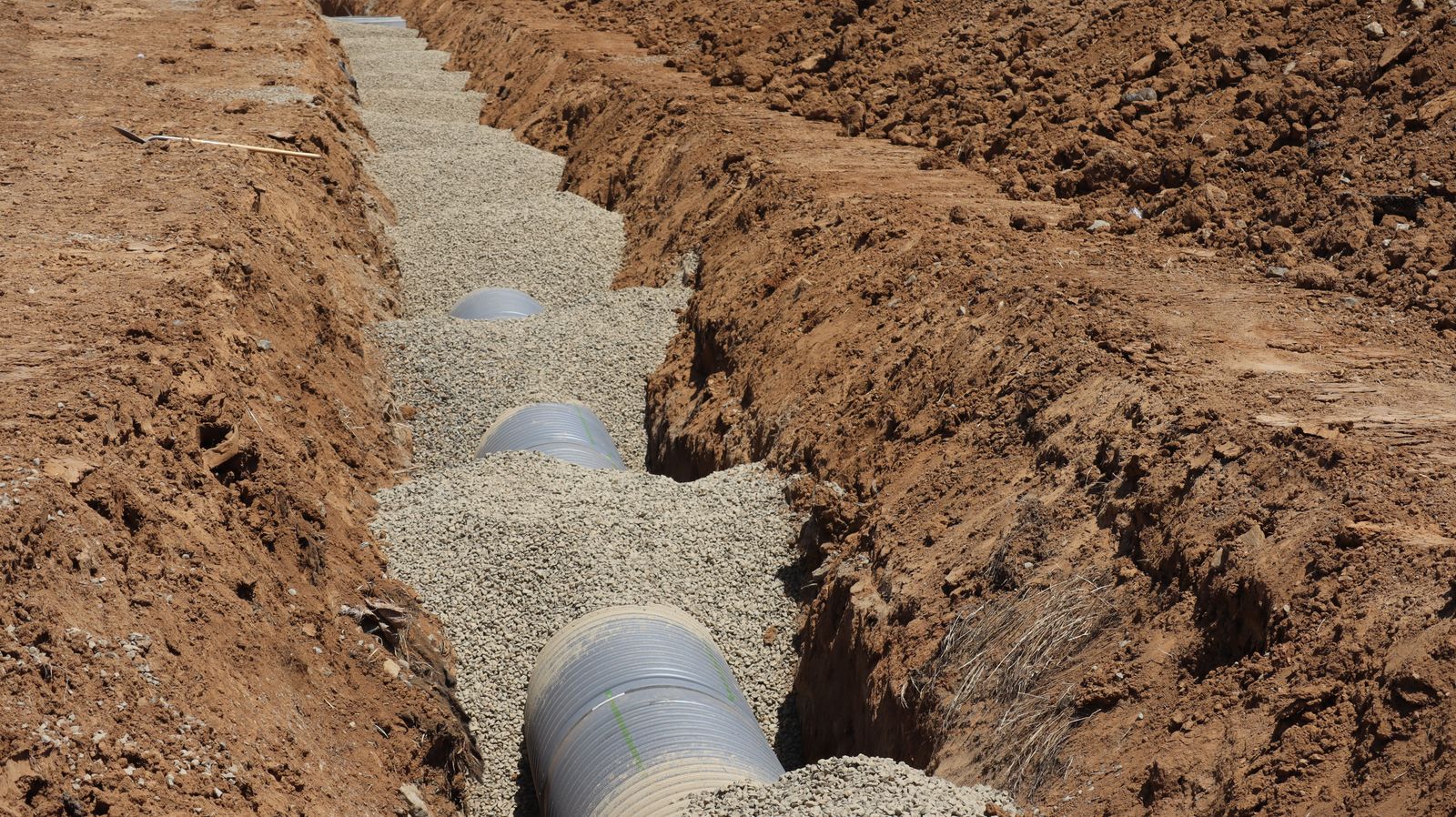
The sewer lateral is the buried pipe carrying everything from your house to the public main at the street, and it is the homeowner's responsibility, not the utility's. Older laterals are commonly cast iron, clay, or Orangeburg fiber pipe, all of which are now at or past end of life. Replacement is done either by open trench excavation or by trenchless methods that work through small access pits.
Signs your sewer line is failing
- Multiple slow drains at once, or gurgling from tubs and toilets
- Sewage smell in the yard, or a stripe of unusually green grass
- Repeated backups even after professional drain cleaning
- Wet, soft, or sunken ground along the line path
- Roots found on a drain machine or camera inspection
- Backups that only happen during and after heavy rain, a sign shallow groundwater is infiltrating through separated joints
- A strip of yard along the sewer path that stays soft or sunken even during a dry stretch in late summer
Why Greenville Laterals Separate Instead of Simply Wearing Out
In stiff clay soils a sewer line can sit undisturbed for decades. Around Greenville the trench is usually backfilled with the same loose sand that came out of it, and sand keeps moving. Over years of wet and dry cycles the pipe settles unevenly, which pulls bell-and-spigot clay joints apart and cracks aging cast iron at the hubs. Once there is a gap, roots from water oaks and pines find it fast, because the shallow water table keeps feeding fine roots right at pipe depth.
The oldest housing near uptown and the blocks surrounding East Carolina University is where this shows up most, since those laterals are often original cast iron or vitrified clay. Post-war and 1970s crawlspace houses commonly have cast iron under the house transitioning to clay or early plastic in the yard. Those transition points are frequently the first place a camera finds a separation.
Digging a Sewer Trench in Sand With Groundwater a Few Feet Down
Sandy soil digs easily, which sounds like good news, but it will not hold a vertical wall. A trench eight or ten feet deep at the street connection has to be benched, sloped wide, or shored, and that widens the footprint across a yard. When crews hit groundwater, and in low areas near the Tar River and its tributaries they often do, a pump has to run continuously while the pipe is bedded and glued. That dewatering time is a real line item on the estimate.
Sand also means bedding matters. New PVC laid straight on unstable sand can develop the same sags the old line had, so proper stone or compacted bedding and careful grade checks are worth paying for. On lots where the run is long and obstacles sit in the middle, trenchless pipe bursting or lining can cut yard damage, though shallow depth and multiple bad joints sometimes make open-cut the more practical choice.
Permits, Inspections, and Who Owns Which Part of the Line
Sewer replacement is permitted work in North Carolina, not a handyman job. Homes inside the city limits are inspected by the City of Greenville building inspections division, and homes in the unincorporated parts of Pitt County go through county inspections. A licensed plumbing contractor pulls the permit, and the open trench is normally inspected before backfill, so plan on the pipe staying exposed until an inspector signs off.
Where the line ties into public sewer, Greenville Utilities Commission rules govern the connection, and any work in the street or right-of-way brings additional approval and street-cut restoration costs. Outside GUC territory, houses may connect to a small town system such as Winterville or Ayden, or run to a private septic tank, and septic work falls under county environmental health rather than plumbing inspections. Confirm which applies before signing a contract, because it changes both the paperwork and the price.
Sewer Line Replacement cost in Greenville
| Scope | Typical Price |
|---|---|
| Camera inspection and locating of existing lateral | $200 to $500 |
| Spot repair of one failed joint or crushed section | $1,200 to $3,200 |
| Full lateral replacement, open trench, typical yard run | $3,500 to $9,000 |
| Trenchless pipe bursting or lining | $6,500 to $15,000 |
| Added dewatering, shoring, or deep tie-in at the street | $800 to $2,500 |
| Driveway, sidewalk, or street cut and restoration | $900 to $4,000 |
These are typical Pitt County ranges for planning purposes; actual cost depends on line length, depth, groundwater, access for equipment, and what the camera inspection finds.
Frequently Asked Questions
Who is responsible for the sewer line in Greenville, the homeowner or the utility?
As a general rule the homeowner owns and maintains the lateral from the house out to the public main or the property line, and the utility maintains the main itself. Because the exact demarcation point varies, call Greenville Utilities Commission before paying for a replacement. If the failure is in their portion, you should not be funding the repair.
Can a sewer line be replaced without digging up my whole yard?
Often yes. Pipe bursting and cured-in-place lining pull or cure a new pipe through the old path using access pits at each end. It works well on straight runs under driveways and mature landscaping. It is less practical when the old line is badly bellied from settling in sandy soil, since lining a sagging pipe preserves the sag.
Do I need a permit to replace a sewer line in Pitt County?
Yes. Replacement of a building sewer requires a permit and inspection, handled by the City of Greenville inspections division inside city limits and by Pitt County inspections outside them. A licensed plumbing contractor pulls it. Expect the trench to stay open for the inspection, and expect separate approval if the work enters a public street or right-of-way.
Can tree roots be permanently stopped?
Cutting roots is temporary; they regrow through the same joints. Permanent fixes are replacement with gasketed PVC or a seamless cured in place liner, both of which remove the open joints roots exploit.
Does homeowners insurance cover sewer line replacement?
Standard policies usually exclude wear and tear failure of buried service lines. Some carriers sell an inexpensive service line endorsement that does cover it. Check your policy before you need it.
Related services in Greenville
Talk to a Local Plumbing Pro Today
One call connects you with a licensed Greenville area plumber. Free estimates on major work.